A plate for holding tea sets on a single sheet, Buncheong ceramic teaplate
Kim Ji-young Ceramics · Tea Tray Baked with Pine Ash Glaze · Check / Horizontal Lines
View at a glance
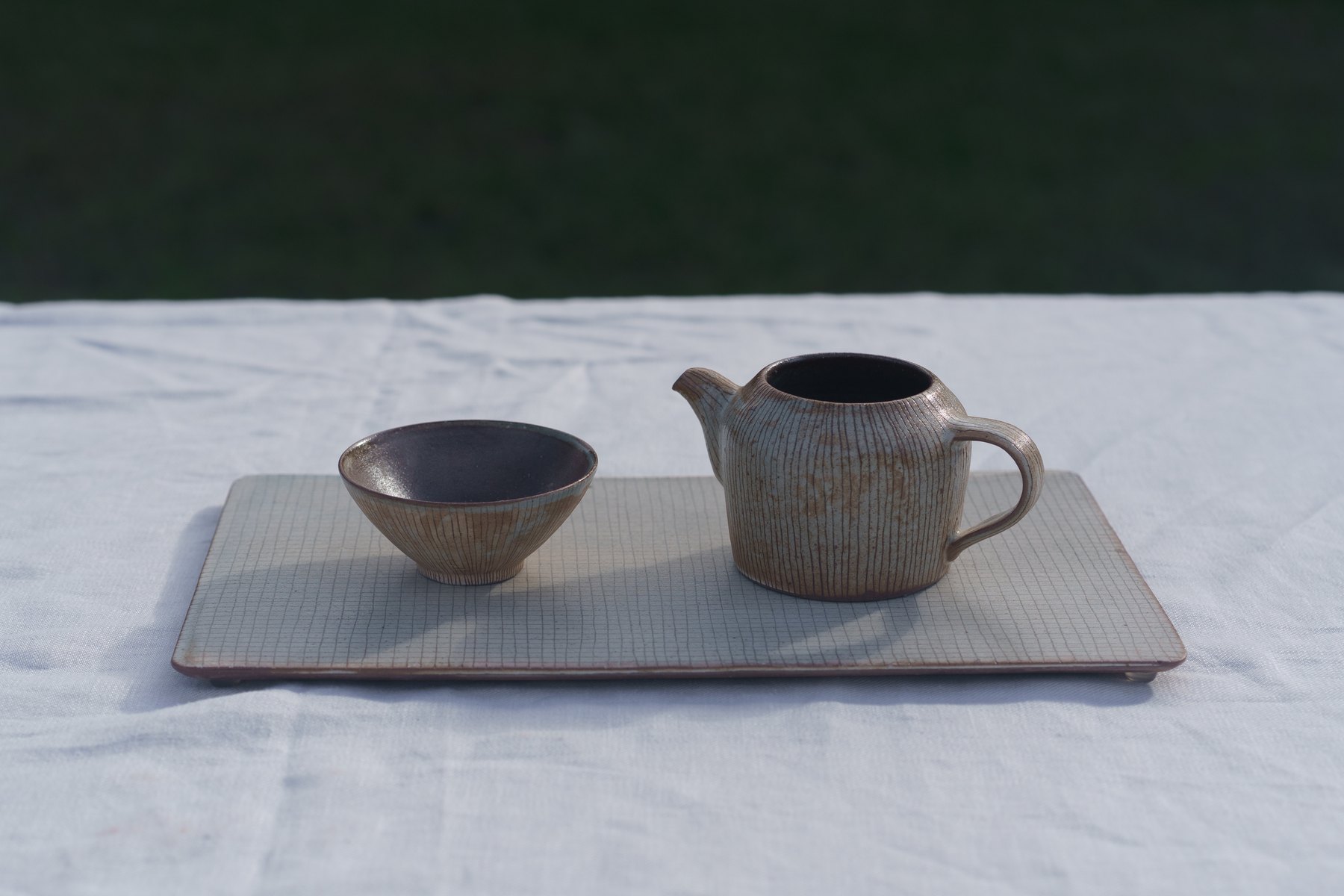
The Kim Ji-young Buncheong pottery tea plate is a tea tray designed to hold a teapot and teacups. It was decorated with handmade slip, hand-drawn, and then glazed with a mixture of pine ash and natural materials before firing. There are two patterns: checks and horizontal stripes.
- author — Kim Ji-young Ceramics (Buncheong artist who designs leaves and flowers collected from travels and walks)
- Options and Prices — Check 160,000 won / Stripe 160,000 won
- form — Rounded rectangular flat plate, four small curves on the bottom
- size — Approx. 31 × 20 cm (Width 31 cm · Height 20 cm; slight variations may occur due to the handmade nature)
- Materials and techniques — Clay, handmade slip, pine ash glaze / Artist's handmade buncheong
- Suitable uses — A tea tray for placing teapots and teacups, the surface of the tea table
- Where to buy — Composition Online Store, Composition Store in Sinchon-ri, Jocheon-eup, Jeju
A single sheet that forms the basis of the tea ceremony
A tea-drinking space is made up of smaller items than you might think: a teapot, a teacup, and the place where they are placed. A teaplate gathers scattered tea utensils onto a single surface, transforming one side of the dining table into a quiet tea spot.
It is a low, flat plate without raised edges, so the bowl placed on top is visible first, and the rounded corners gently finish the lines. Four small feet on the bottom lift the plate slightly off the table, so when viewed from the side, it appears as if a single piece of pottery is lightly floating.
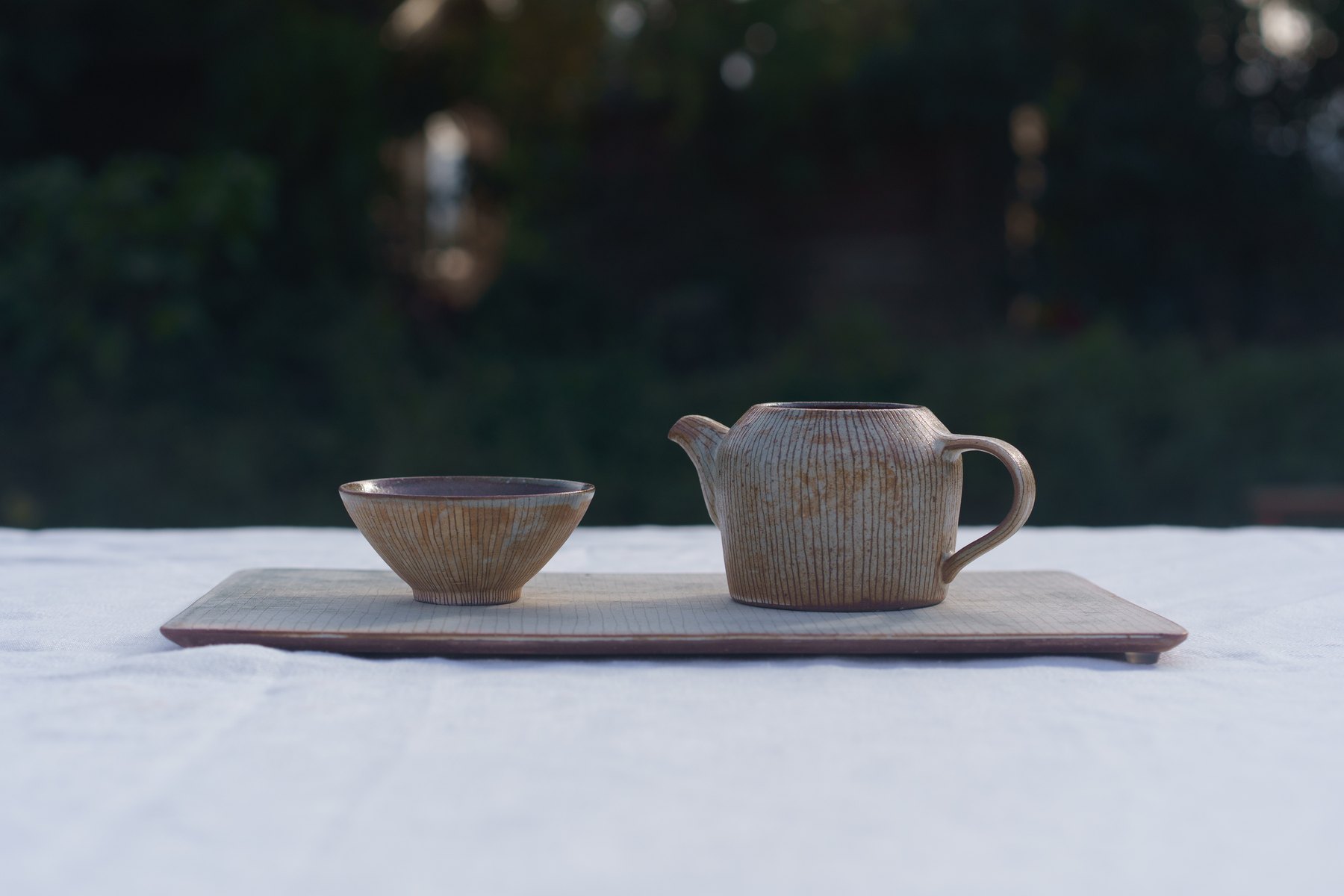
The teapot and teacup in the photo are by the same artist Buncheong teapot with vertical stripes와 Buncheong teacupIt is sold separately.
Two patterns
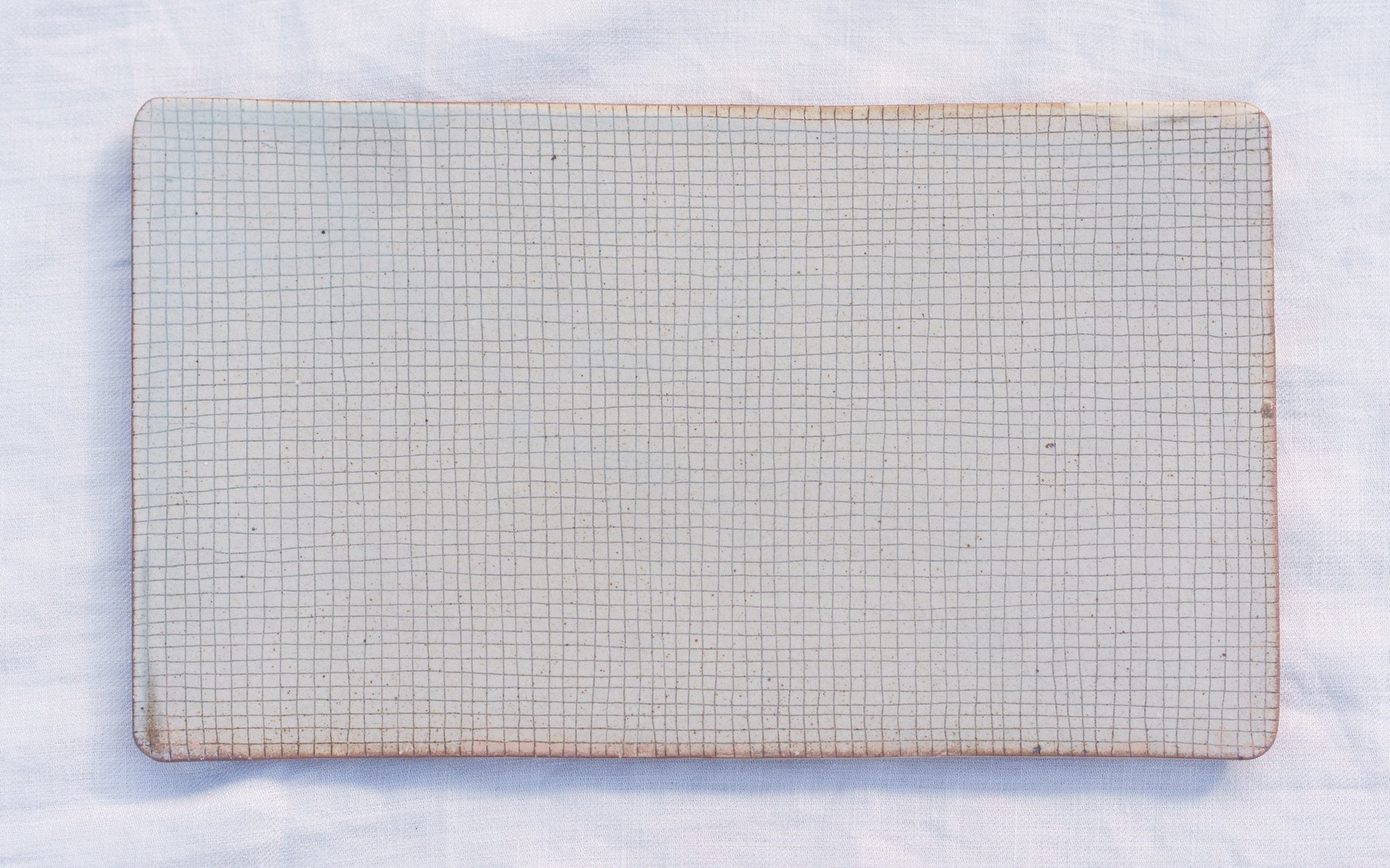
Check · 160,000 won
A grid was created by drawing fine, earthy lines closely together horizontally and vertically on a grayish-white slip. Since the lines were drawn by hand, each square is slightly tilted and shaky, making it neat like graph paper yet not rigid. The color of fire has spread slightly reddish along the edges.

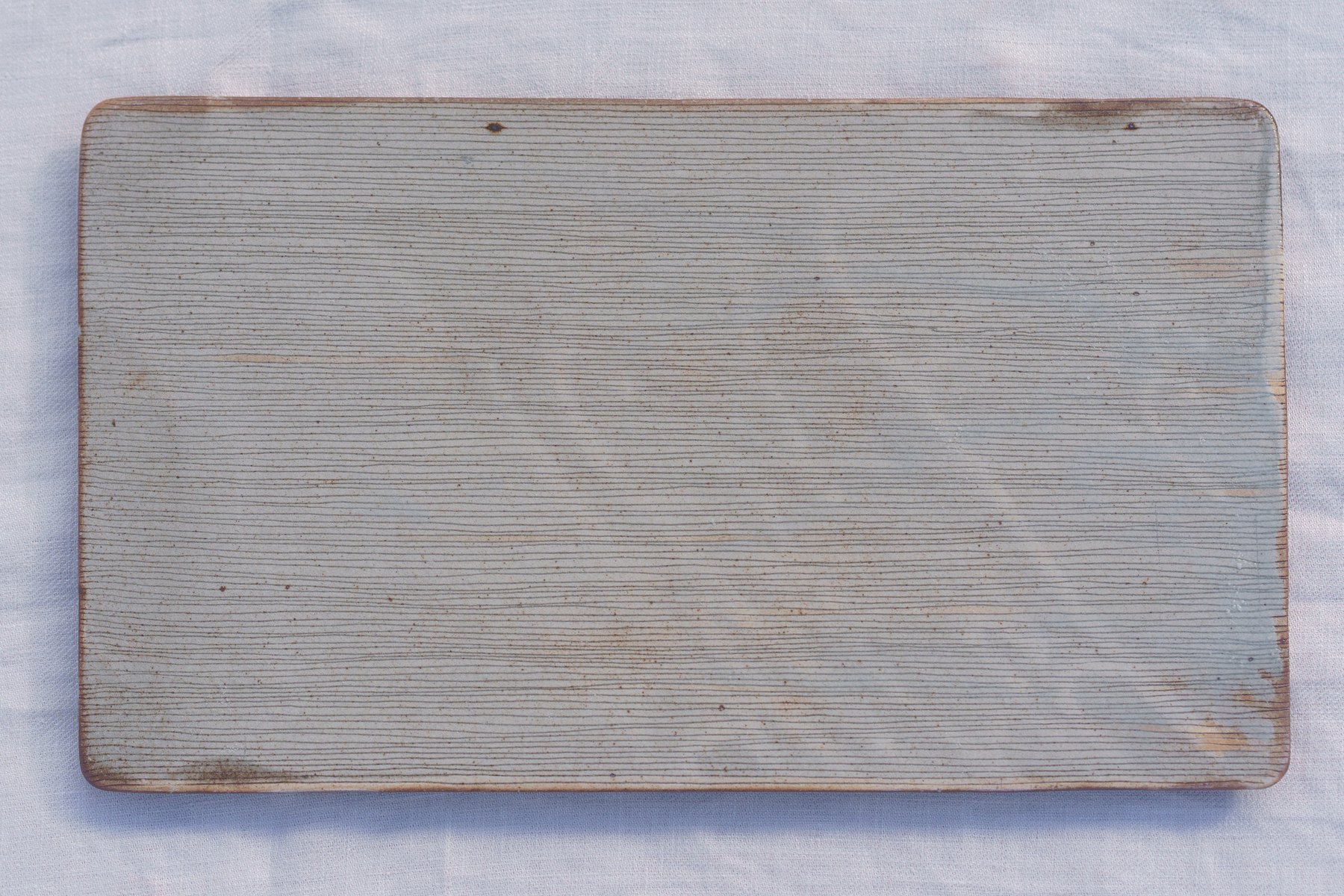
Horizontal line · 160,000 won
Long, thin horizontal lines resembling wood grain fill the entire panel. Grayish-blue and apricot-colored slip show through the gaps between the lines, and black iron spots appear here and there, creating a texture like a sandy beach where waves have passed. It gives a slightly more natural and warm impression than a check pattern.

Neatly arranged, even on the back
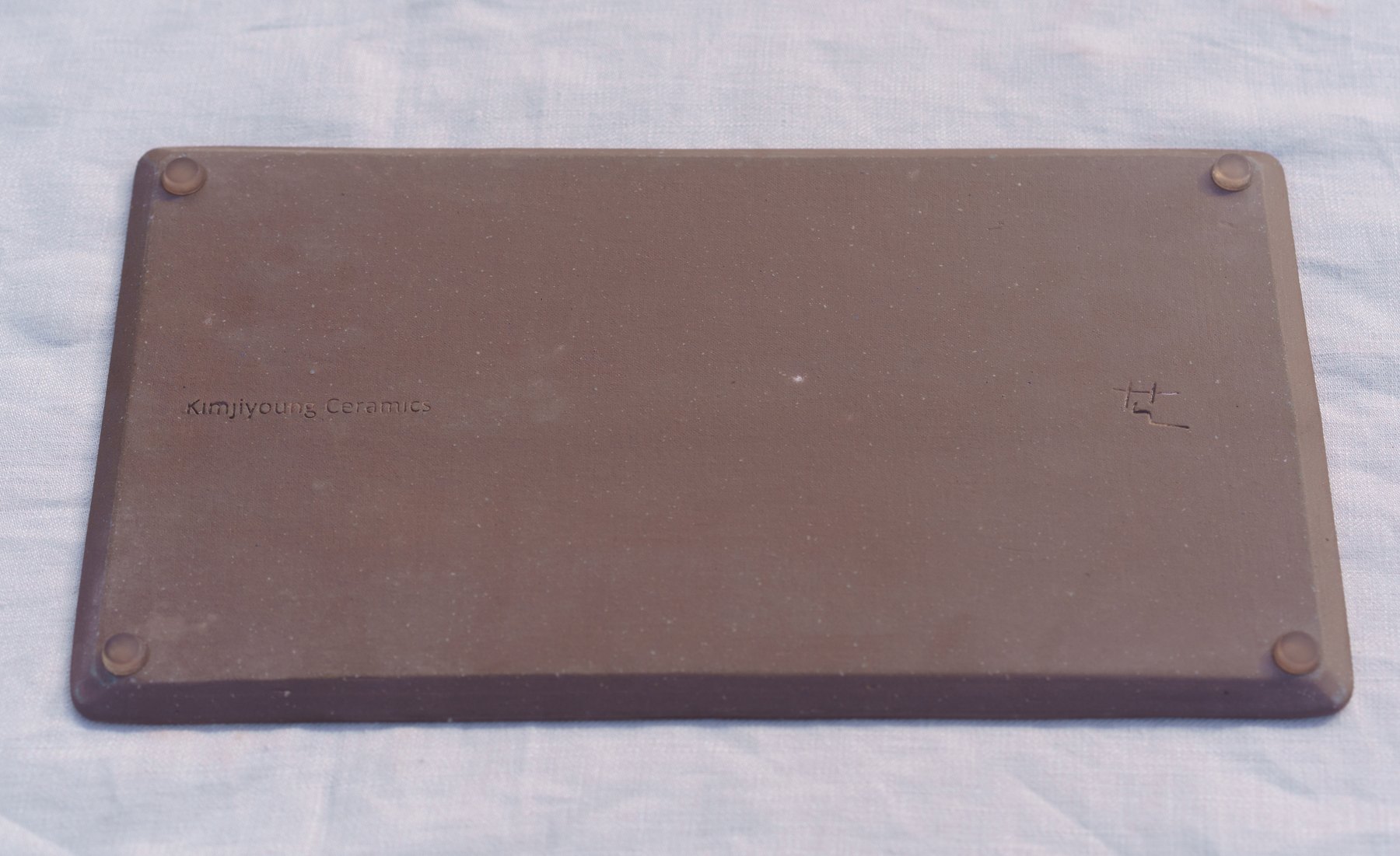
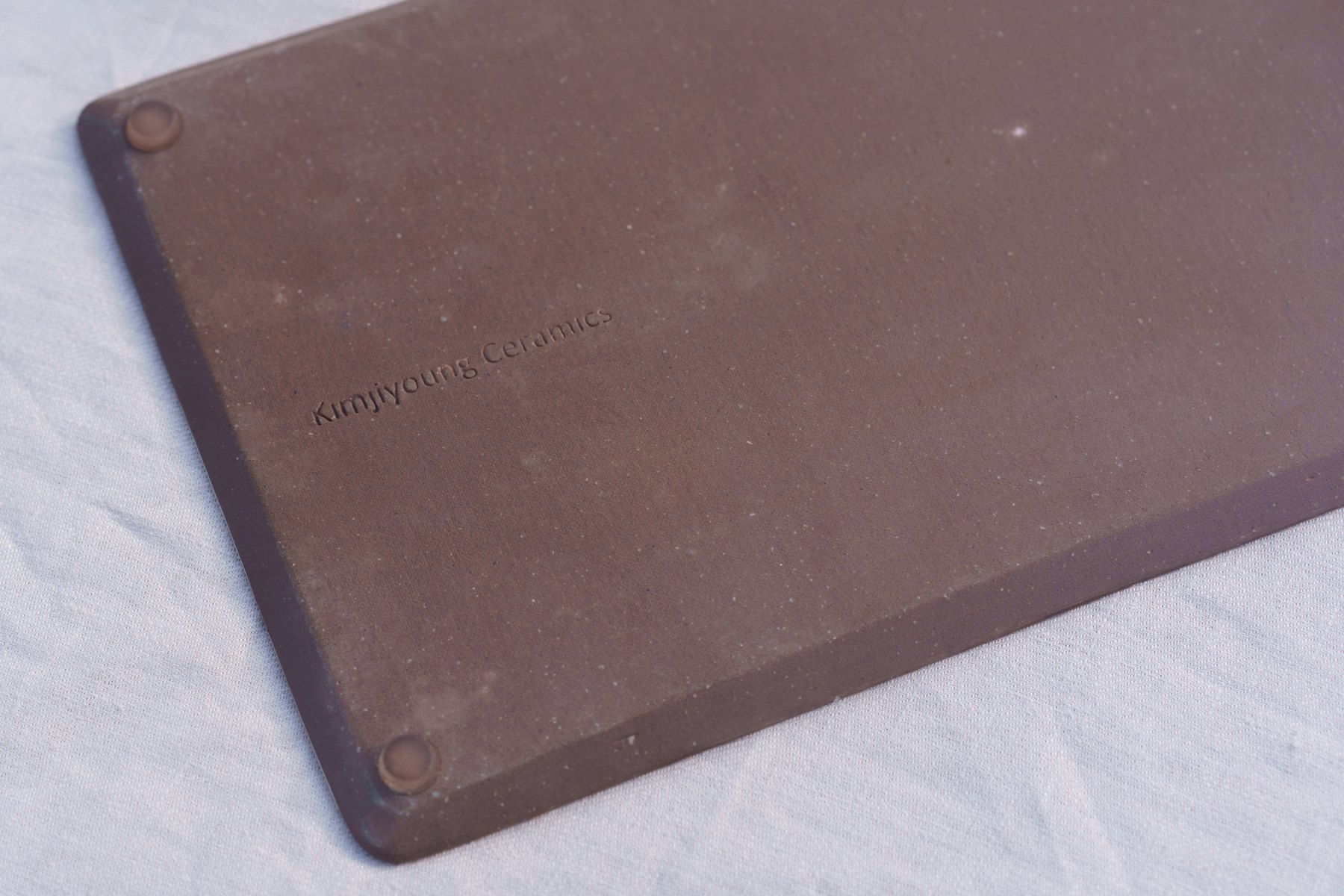
The back is the natural dark earth color without any slip coating. The edges are beveled so that the plate appears thinner and lighter when viewed from the front, and there is a small foot attached to each of the four corners. On one side, the engraving 'Kimjiyoung Ceramics' and the artist's mark are stamped.

Kim Ji-young, a person who crafts vessels close to nature
I draw patterns using leaves and flower petals collected during travels and walks, and apply slip made from pure materials. I create ceramics that are close to nature by using glazes made from pine ash and natural materials.
Unlike standardized white or celadon, in Buncheong, the iron in the clay blooms as black dots, and the traces of the slip flowing down become its natural beauty. The rough texture of the clay subtly shows through, and the artist's brushstrokes and touch remain intact on the surface of the vessel. Even without elaborate decoration or smooth concealment, it is complete and beautiful in itself.
Because it is Buncheong, a one-of-a-kind expression
Buncheong is a type of Korean pottery fired by applying a white slip over gray clay. On wide, flat ceramic plates, the shades of the slip are more clearly visible, with grayish-white, grayish-blue, and apricot hues quietly blending within a single piece.
Therefore, no two of these plates are exactly alike. Some have slightly denser lines, others have the color of the fire leaning to one side, and some have an extra iron spot. Finding the one that catches your eye while selecting is also part of the joy of acquiring handcrafted pottery.
Usage and Management
· Before first use, rinse once in lukewarm water and dry thoroughly.
· If tea or water spills, please wipe it immediately with a dry cloth. Tea may seep into the lines and the color may deepen gradually; this is a natural change as the bowl absorbs time.
· Hand wash with a soft sponge and neutral detergent, and store after drying completely, including the heel at the back.
· Since it is a wide and thin board, please be careful not to bump the corners or drag heavy dishes across it.
· Dishwasher, microwave, oven, and direct heat use are not recommended.
Frequently Asked Questions
Q. Will I receive a plate identical to the photo?
A. Due to the nature of Buncheong, which is hand-molded and features slip applied to draw lines, the spacing and wavering of the lines, the spread of the slip, and the position of the iron dots vary from piece to piece. Even for the same pattern, the plate received may have a slightly different appearance from the photograph; this is not a defect but the unique characteristic of handcrafted pottery.
Q. Do the teapot and teacup in the photo come with it?
A. No, we will send you only one tea plate. The teapot and teacup in the photo are the same Buncheong vertical-striped teapot and Buncheong teacup (vertical striped) by artist Kim Ji-young, and they can be purchased separately.
Q. What is the size?
A. It is approximately 31cm wide and 20cm long. It is a good size to place a teapot and one or two teacups on. As these are handmade pieces, there may be slight variations between each one.
Q. How are checks and horizontal lines different?
A. The check pattern creates a grid by drawing fine lines closely together horizontally and vertically, giving a neat and calm impression. The horizontal lines feature long, wood-grain-like stripes with apricot and grayish-blue slip showing through, creating a slightly more natural and warm impression. The price for both patterns is 160,000 won.
Q. What are the black dots and mottled colors on the surface?
A. The iron in the clay bloomed into black dots upon meeting the fire of the kiln, and these are traces of the brush-applied slip showing through differently depending on its thickness. It is a characteristic Buncheong appearance, left as is rather than smoothly concealed.
Q. Can I use a dishwasher?
A. To preserve the texture of the natural glaze and slip, we do not recommend using dishwashers, microwaves, ovens, or direct heat. Please hand wash with a soft sponge.
Q. Can I see this at the Jeju store as well?
A. You can view and select items in person at Composition, a lifestyle select shop located in Sinchon-ri, Jocheon-eup, Jeju. Store stock may vary depending on the season, so we recommend inquiring before visiting.
Product Information
| author | Kim Ji-young Ceramics |
|---|---|
| type | Buncheong · Pottery Plate (Tea Plate, Tea Tray) |
| composition | One type: Check / Horizontal |
| size | Approx. 31 × 20 cm (Width 31 cm · Height 20 cm; slight variations may occur due to the handmade nature.) |
| price | 160,000 won each |
| subject matter | Soil, homemade slip |
| weakness | Glaze made from pine ash and natural materials |
| produce | Handmade by the artist (pieces molded, drawn, and fired one by one) |
| sale | Composition · Jeju Lifestyle Edit Shop |
See more of the Kim Ji-young ceramics collection
When vessels from the same artist are placed together, the rhythm of the light and lines of the slip naturally flows.
Buncheong teapot with vertical stripes — 140,000 won
Buncheong teacup — 30,000 won~32,000 won
Buncheong layered cup — 34,000 won
Buncheong iced Americano cup — 50,000 won
Buncheong straight water cup — 38,000 won
Buncheong Zerg — 46,000 won ~ 54,000 won
Buncheong iron-glazed water cup — 40,000 won
Buncheong box with vertical lines — 150,000 won
Buncheong vase — 60,000 won ~ 90,000 won

Reviews
There are no reviews yet.